
Will Pop-Up continue to become the “Hero” of the brick-and-mortar business in a POST-COVID economy?
Pop-Up Activation
Shopping centers in the U.S. have faced unprecedented challenges in the past few years. The industry finds itself navigating uncharted waters amid the novel coronavirus pandemic. In this article, we will be discussing how some of the insightful Pop-Up examples are using technology and service platforms to bridge the gap between online and brick-and-mortar businesses. The objective is to frame the future context for brand engagement and public realm activation. By sharing a series of successful case studies, the article is to inspire promising strategies in adapting the ever-changing consumer habits to allow retail development to be future-ready.
Background
The idea of “Malls” has become increasingly unattractive to consumers across all continents. In the United States, the number of visits to shopping centers has been declining for the past ten years. Statistics have shown a downward fall in U.S. retail foot traffic for nearly two-thirds, from an average of 35 billion visits during the holiday seasons in 2010 to about 13 billion visits by 2018. U.S. store closures reached an all-time high in 2019, which includes the closure of traditional department stores and big-box retailers, such as Sears and Forever 21. Most of the shopping centers in the country are relying on these conventional retail establishments as anchor stores to draw foot traffic for smaller tenants. The closure of anchor stores resulted not only in large vacated lease spaces, but also in a dramatic decline of foot traffic to neighboring businesses at shopping centers. Without a substantial revitalization, shopping centers in the U.S. will no longer be able to operate at their full capacity.
As physical foot traffic to retailers has plummeted in the wake of direct-to-consumer trends, our urban life has become increasingly alienated and atomistic. Three out of five Americans reported they are lonely. It’s become more common to live alone not only in the U.S. (28% of U.S. households are single-person households) but across the world, from Germany to Japan. Technology has made communication and information more accessible than ever, but it has yet to replace that human craving for tangible social interaction. The demand for a physical interactive shopping experience is driven by the yearning to engage and the desire to connect with people. Consumers’ expectations have evolved way beyond simply purchasing desirable products. A holistic ecosystem allows brands to deepen their interaction with consumers in both the digital and real worlds.
Online shopping has been eating up the sales market share in the past two decades, yet e-commerce has not replaced the brick-and-mortar sales as we have imagined. According to the Commerce Department, the total non-store retail sales were only reaching 16% of overall retail sales in 2019. According to a First Insight report conducted with 1,000 respondents who shopped, offline spending tended to be several times more than online. More than 80% of respondents said that in brick-and-mortar stores, most of them would purchase additional items that they didn’t expect to buy. By comparison, only 60% of online consumers add other items to their shopping cart. Although online versus offline consumer habits vary from person to person, online purchases are generally dominated by technology products, groceries, casual wear, essential goods, and other items that are high in price-performance ratio or low in unit price. For products with high added value and unit prices, consumers often choose to browse products online and then complete their purchase offline. While 96% of Americans shop online, the vast majority of sales have been completed offline. Millennials, in particular, prefer to shop offline because they can touch and experience the product before making the purchase. As a result, brick-and-mortar stores are no longer places only for transactions, they have become powerful channels for consumers to discover, and be inspired or entertained.
Pop-Up
In today’s digital age, essential daily purchases can be made easily online by the press of a button. There is a growing expectation on brands to cater physical content and personalized in-person experience towards the audience’s preferences. The world looks at brands as the facilitator of connection, and as the platform to foster meaningful relationships with their clients. Nevertheless, one of the major setbacks for businesses to introduce interactive experiences is the high cost of brick-and-mortar overhead. Pop-Up has become a perfect medium for companies to take their content from the digital realm to live participation. It allows brands to initiate a tangible customer experience within a budget.
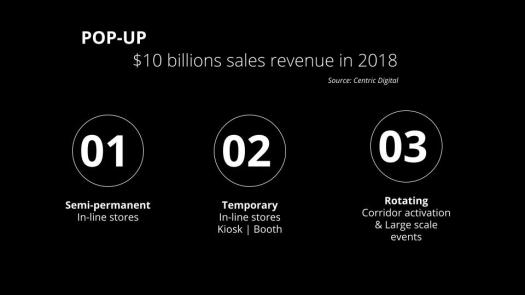
Depending on the purpose of each project, Pop-Up divides into the following typologies:
- Semi-permanent: occupying the entire in-line store or a whole building
- Temporary: within a store or at a kiosk
- Rotating: public space activation or events
Pop-Up focuses on creating in-person experience. Its flexibility in configuration and duration allows for a seamless channel to provide thoughtful hospitality to their consumers.
The total Pop-Up revenue in 2018 has reached $10 billion in the U.S, which has proven the growing popularity of in-person experience. More and more brands are joining the Pop-Up collaboration to create an in-person experience. These include Direct-to-Consumer (DTC) brands, internet giants, big-box retailers and even film & television companies. The successful Pop-up examples in this article have all created visceral brand connections, driven the future of market trends and public realm, and influenced consumer habits around the world.
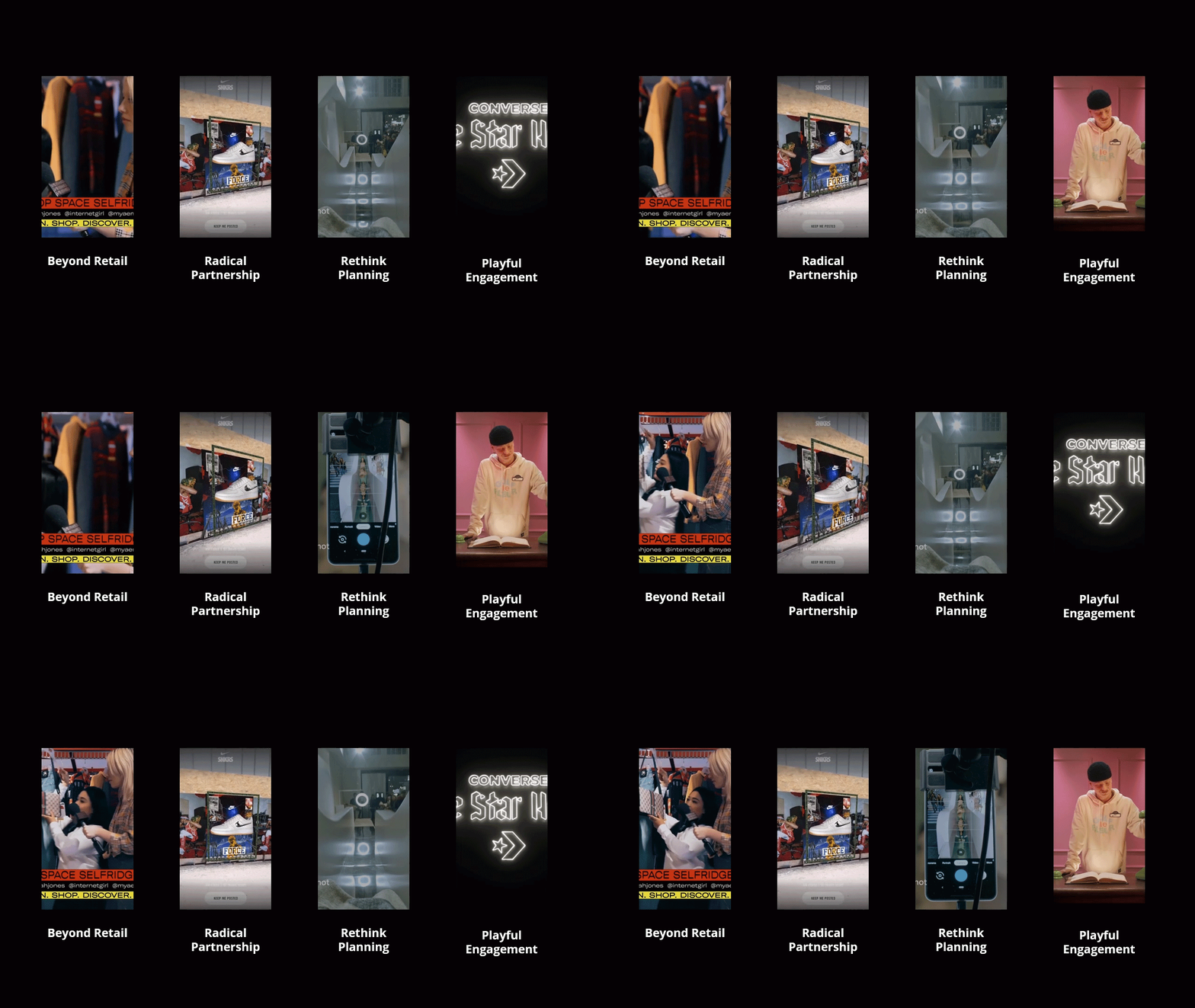
There are four attributes of all successful Pop-Ups, whether big or small, at a corner within another store or occupying a 1,000 seat stadium for a show. They are described under each of the following sections: 1) beyond retail; 2) radical partnership; 3) rethink planning; 4) playful engagement.
Beyond Retail
An effective strategy to bypass traditional sales models has become a unanimous demand from emerging brands (DTC brands). These days, brands that tell stories on a physical platform ought to grow beyond products to authentic experiences. Brand identity should embody a specific lifestyle, taste, and culture. They not only put their customers first but offer a full range of hospitality services that include sales, entertainment, and educational content, social platforms, product development, and more. They should shape their cultural context to engage customers by tailoring all-inclusive personalized services to their clientele. The sense of exclusivity in marketing approaches elicits an immediate emotional response from the consumer. These unique communication methods make it possible for brands to forge a strong connection with every client.
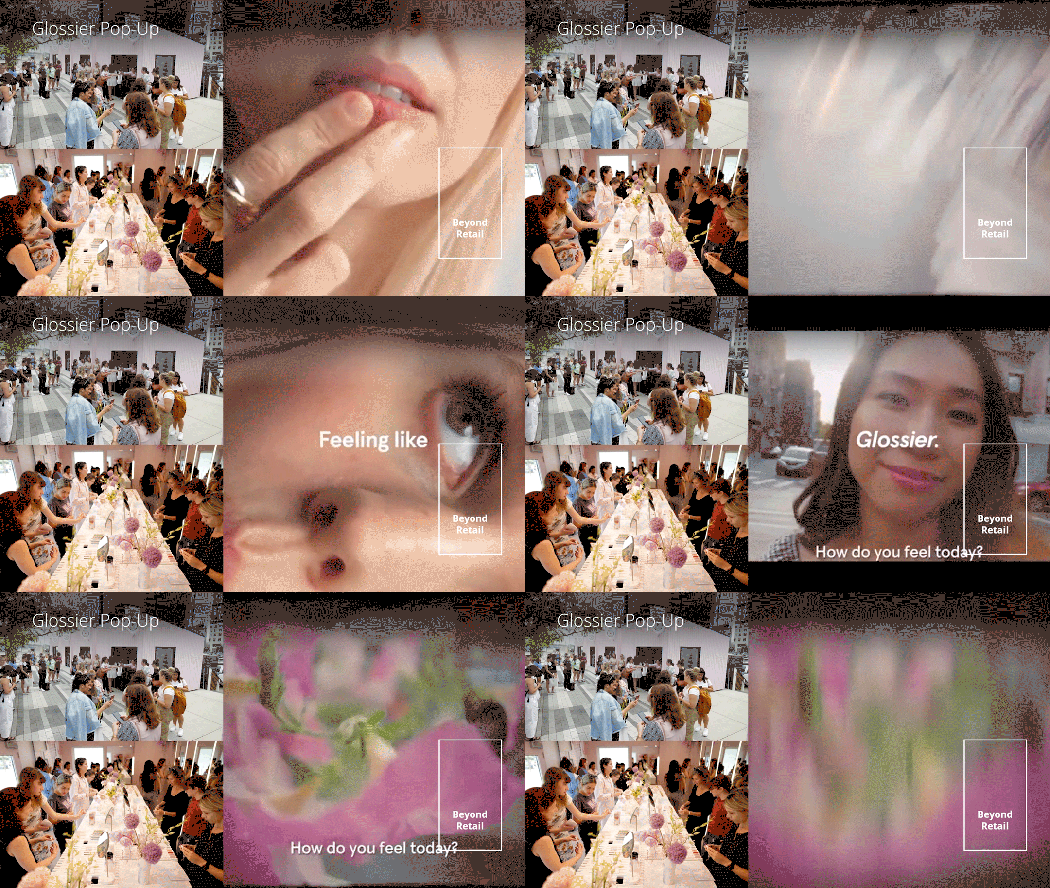
As an example, Glossier is a back-to-basic beauty brand based in New York. Like many DTC brands today, it also first started online. With a specific product concept and marketing approach, it has gained popularity among millennials and becoming an omnichannel brand that the market cannot ignore. According to The Wall Street Journal, the beauty company was valued at $1.2 billion in 2019. Glossier has a strong personality and a modest product range that focuses on the integrity of skincare, colored cosmetics, and fragrances as a way to celebrate the natural beauty of its customers, rather than seeing products as artificial paints. Its tagline is “Beauty products inspired by real life.”
With some 150,000 followers on YouTube and 2.7 million followers on Instagram, one of the Glossier’s greatest attributes is driving product development with engaging online content. The brand provides a collection of hero contents as editorial descriptions. In turn, the virality of these posts encourages user-generated contents, such as product reviews, which validate the products and the brand’s credibility. This chain effect stimulates on-going conversations and forms an efficient sales model for the business.
Glossier is known today for its extensive and highly-engaged fanbase, with the brand continually promoting its online presence alongside its brick-and-mortar business. As part of its Pop-Up presence, Glossier’s Pop-Ups have traveled to every major city in the U.S. When its Pop-Up first opened in London back in November 2018, it attracted a record-breaking number of visits. Glossier chose to expand its brand reach in London by keeping the Pop-Up opened through the end of 2019.
In every Pop-Up, Glossier has offered a highly customized and unique in-person experience. For example, last September, Glossier set up an L-shaped Pop-Up in Boston consisting of nine pink sheds, each with large floor-to-ceiling glass doors that showcase the beautiful pink-themed showrooms inside. Some of the sheds were listed as “Shop All” to display all Glossier’s products. Specific products or product categories have been assigned to other showrooms, such as skincare, makeup, perfume, and eyebrow. A shed featuring its Generation Lipstick was designed for an Instagram moment. Inside, you would find a sizable G-shaped statue and pink velvet walls as a backdrop, with a large mirror set up for selfie experiences.
The Glossier Pop-Up staff, collectively known as “The Editors,” was easily recognizable in baby pink jumpsuit uniforms. At the beginning of the experience, leaflets containing a map and a shopping list were handed to each visitor. The Editors were known for their warm smiles and patience. They placed orders for the visitors and delivered them to the pick-up counter, as such the visitors did not have to carry their selected items throughout the journey. Glossier intentionally designed the pick-up counter as the final stop, where the Editors would farewell the customers by presenting their nicely packed purchases.
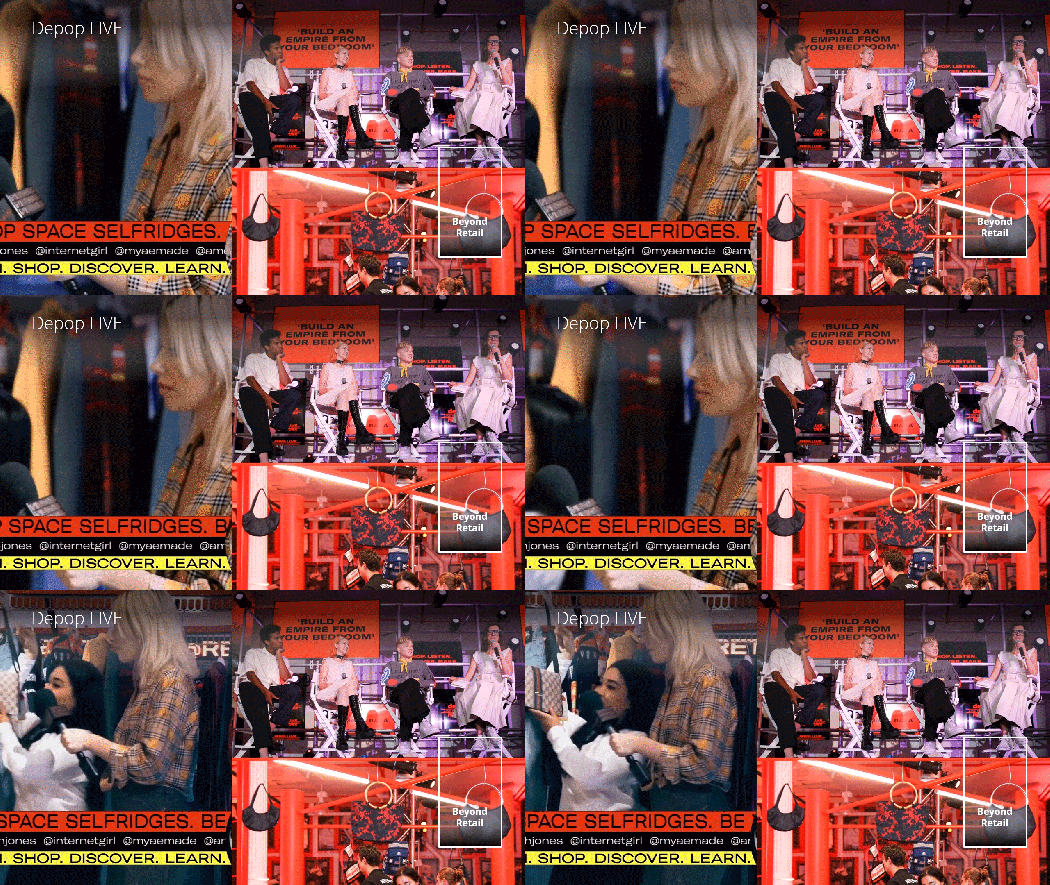
Another case study is Depop, a London-based community mobile marketplace. Combining Instagram-like social features with the eBay-like resale mechanism, it is an open platform primarily for selling and buying vintage clothing and premium streetwear. This year Depop has closed a $62 million Series C round. 90% of its astonishing 16 million users today are under the age of 26. Depop’s rapid growth is driven by a culture of young people feverishly hunting for limited edition and collectible for resale online extended by its active Pop-Up presence. For instance, the Depop Space Selfridges is a partnership with the premium department store Selfridges to provide an in-store display platform for Depop users. With a similar concept, Depop Live is a two-day immersive shopping and educational experience that allows young people to experience an offline version of the Depop marketplace. The marketplace event features workshops, interviews, entertainment, and performances. Both events are free and focus on spotlighting the top sellers on the platform. Depop utilizes Pop-Up experiences to celebrate the success of its users, further boosting the brand power by leveraging its fanbase conversations and ample user-generated-content.
Radical Partnership
Radical Partnership is a catalyst for experience-driven retailers and brands. With the end Radical Partnership is a catalyst for experience-driven retailers and brands. With the end goal to accomplish the highest possible impact, different brands team up to expand brand engagement and social reach by leveraging each other’s fanbase. These mutually beneficial partnerships are becoming more and more prevalent in recent years. The integration of social media and physical events, which optimizes in-person experience and digital transformation, is another type of radical partnership. The cross-disciplinary perspectives of marketing enable brands to expand their customer base with a maximal impact on social media.
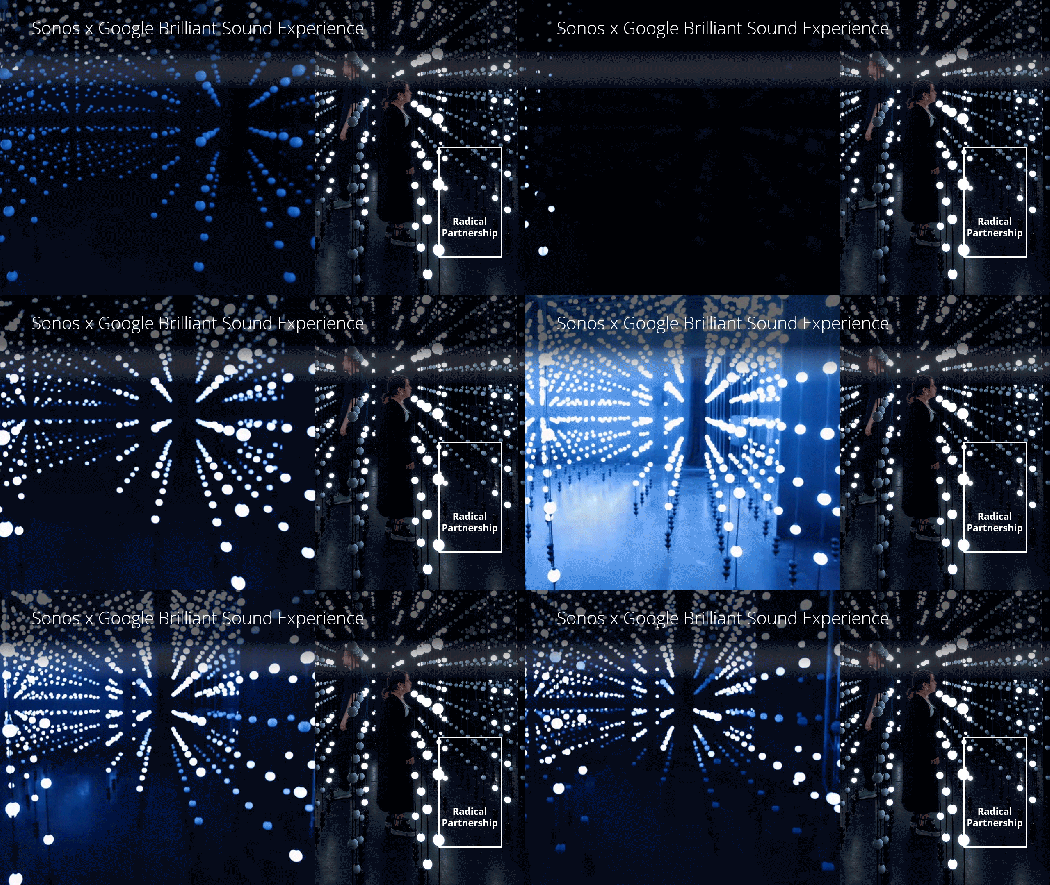
Sonos x Google hosted the Brilliant Sound Experience, a Pop-Up that featured AI-assisted music from the experimental composer Holly Herndon, in London and New York to explore the science of sound. In three different experiential sessions, visitors experienced the scientific elements of sound with the help of Google Assistant. The visitors indeed embarked on an experiential journey from the head to the heart, and Sonos’ products were exquisitely showcased throughout.
The first room demonstrated the invisible power of sound. Visitors immersed themselves in a song composed by Holly Herndon, where 1,720 LED lights, 20 audio channels, and 18 speakers animated the song and created an experience of how sound can move through space in 360 degrees. In the second room, visitors experienced the structure of the song “Rylan” by The National. Large light sculptures illuminated with the song showcased individual layers of the original recording, such as bass, vocals, or guitar solos. Through the installation, visitors engaged in deep listening of the various elements of the song and experienced the change when sound became music. In the third room, the visitors experienced the effect of music on their brains. By wearing an EEG headband, the interactive device analyzed how a song activated the visitor’s brain waves and turned them into visual art. The room of the audience recognized the visitor’s different emotions by the oscillating electronic graphics projected on the screen.
In addition to the music experience, this Pop-Up included workshops, forums, and conversations on how artificial intelligence influences music. Admission to the Brilliant Sound Experience was free, and tickets had been sold out weeks before the doors opened, with over 3,300 visitors in both cities attending the event. The experience also attracted a wide range of media attention, including Wallpaper, Ad Week, The New York Times, Campaign, VICE, Evening Standard, and Mashable.
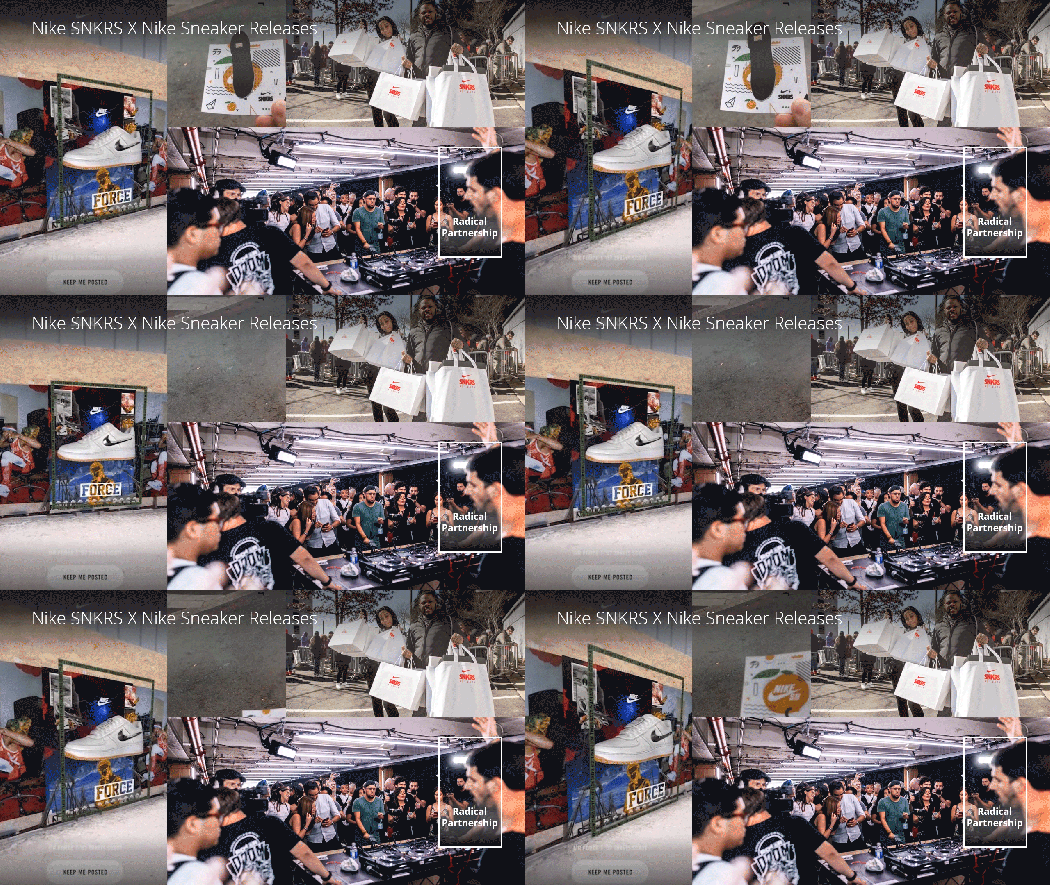
Another example of radical partnership is the collaboration of different entities or areas within a brand. Nike’s SNKRS app collaborating with its sneaker launches is an excellent example of digital platforms combined with in-person experiences.
Nike has been releasing limited edition products using the SNKRS app platform since 2015. Fans must become SNKRS subscribers to access the latest launches, hottest events, and exclusive releases that Nike has to offer, including release times and locations, etc. Today, SNKRS accounts for 20% of NIKE’s overall digital business. In a recent interview, Nike COO Andy Campion mentioned the launch of Air Jordan 11 ‘Bred’ was the most successful in their history, with the product sold out in 28 minutes powered by the SNKRS app.
In 2019, Nike hosted a two-month-long, exclusive Pop-Up event for SNKRS users in Atlanta, which sold limited-edition sneakers, apparel, and other merchandise. Daily notifications were sent to the users by SNKRS’s “Shock Drop” for limited releases and inventories. Inside the Pop-Up, visitors could continue to discover more limited-edition products through SNKRS’s real-time location. Besides, the store has also set up an “auto-gift machine” to offer gifts to users via SNKRS QR codes.
Nike described the Pop-Up as “the physical manifestation of the SNKRS app.” The SNKRS app targets the core community, with the loyal fans acting as “influencers” to spread exclusive insider news to ordinary sneaker fans and the general public, creating a KOL (Key Opinion Leader) community-driven effect. Through the fanbase in SNKRS, Nike can launch products at a concert, park, or any other public places promptly. The sneaker releases of Nike have become active branding events of topical interest, which are activated by the digital platform beyond brick-and-mortar stores but engage consumers with in-person experiences. This synergy will be the new normal in the next five years.
Rethink Planning
Rethink Planning means rethinking the content and space of a brick-and-mortar store to enhance product and brand experience. Visceral experiences help brands to build a deeper connection with their customers by manipulating sensory perceptions and emotions. Engaging setups or spaces in a store, where both adults and kids can have fun, enriches not only the product experience, but also create memorable experiences.
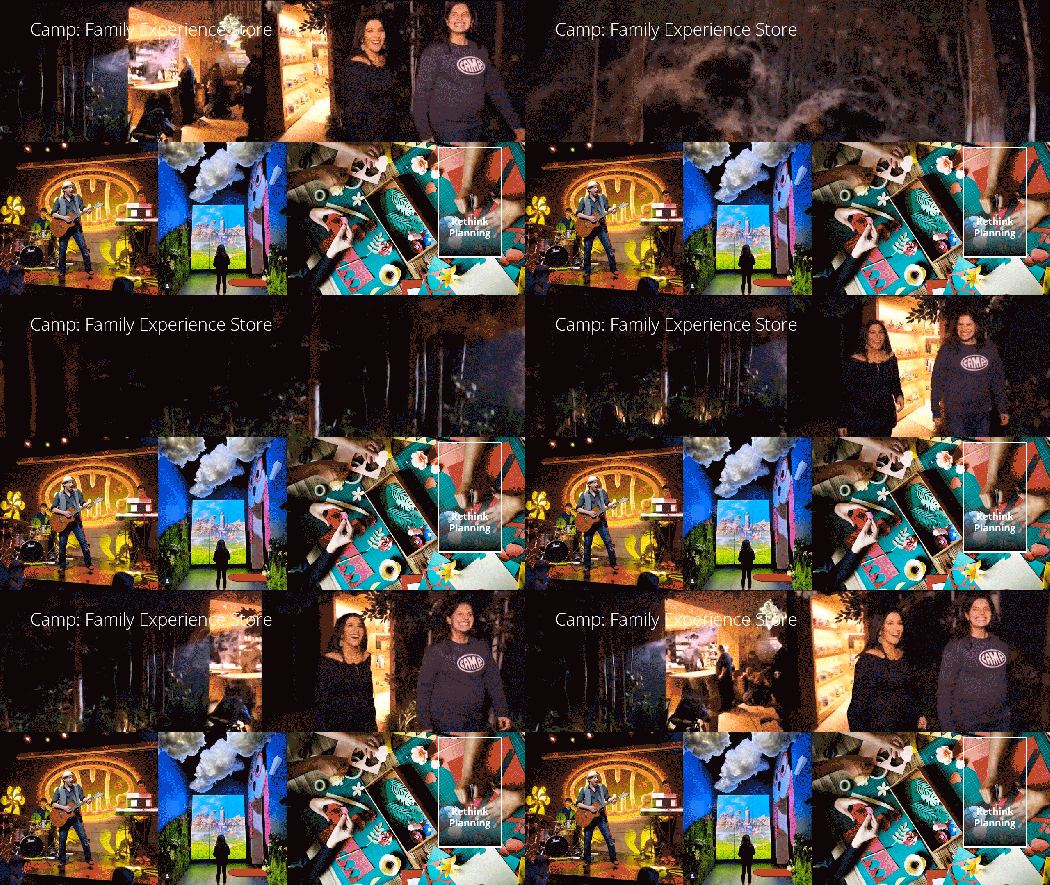
Camp is a toy store that operates in a Pop-Up format, which focuses on creating family experiences. Its first store opened on Fifth Avenue in New York back in December 2018 and has since expanded to three stores in New York and two more in South Norwalk and Dallas. These stores have a marketplace displaying merchandise at the front, and, at the Camp is a toy store that operates in a Pop-Up format, which focuses on creating family experiences. Its first store opened on Fifth Avenue in New York back in December 2018 and has since expanded to three stores in New York and two more in South Norwalk and Dallas. These stores have a marketplace displaying merchandise at the front, and, at the back, a multi-purpose space called Magic World set up with an immersive theme that changes every few months. The Magic World can be entered through a “magic door”, with toys on walls, tables, and even floors that are all free-to-play and available for purchase. It also has a full schedule of activities each costing $20 to $30 per person. These include crafts (snowball making, animal masks), fitness training (musical yoga, obstacle courses), and entertainment (children’s comedy, live music). A café inside the store is available for parents to sit back while watching their kids play.
Only 30% of Camp’s sales come from toy merchandise, with souvenirs, novelty products, apparel sales, and paid events making up the rest. The store encourages families to sign up for a free membership that allows them to earn points and participate in the in-store special events at Camp. The flagship store on New York’s Fifth Avenue typically attracts between 1,000 and 1,200 visitors on weekdays and around 2,000 on weekends. Each family on average spends about an hour and a half in the store. About 80-85% of families made their purchases. The conversion rate is 56%, with more than 40% of that coming from repeat customers.
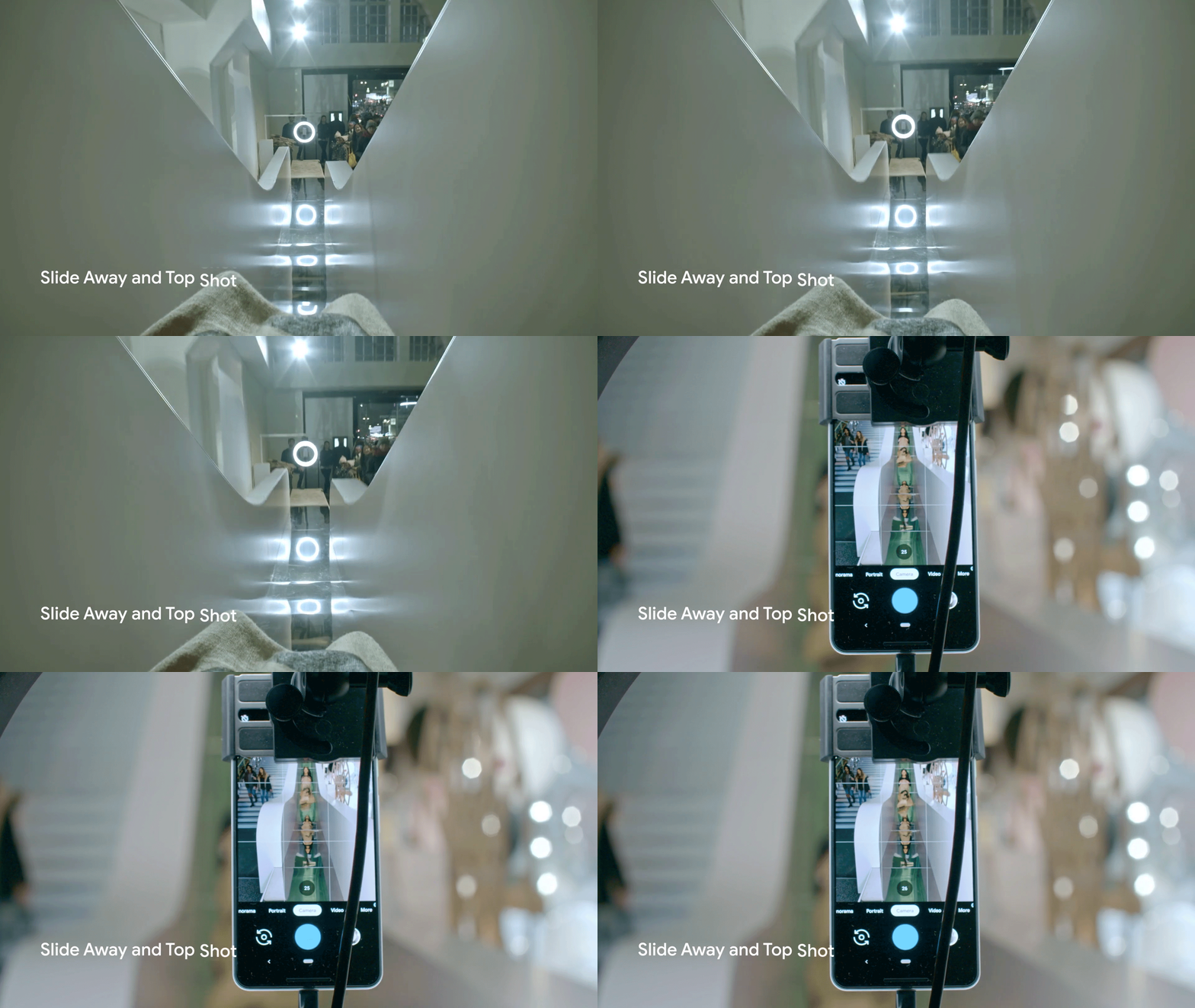
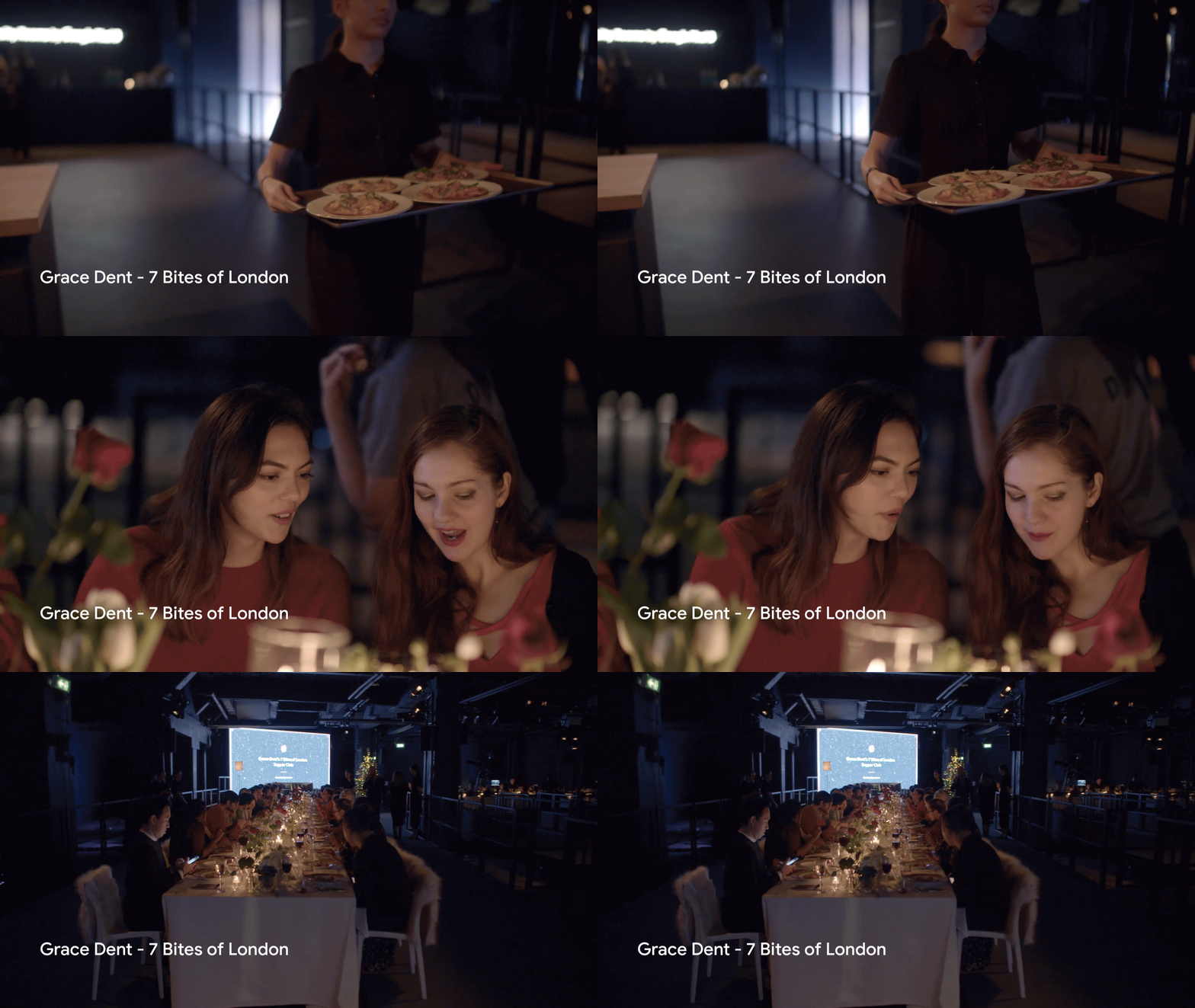
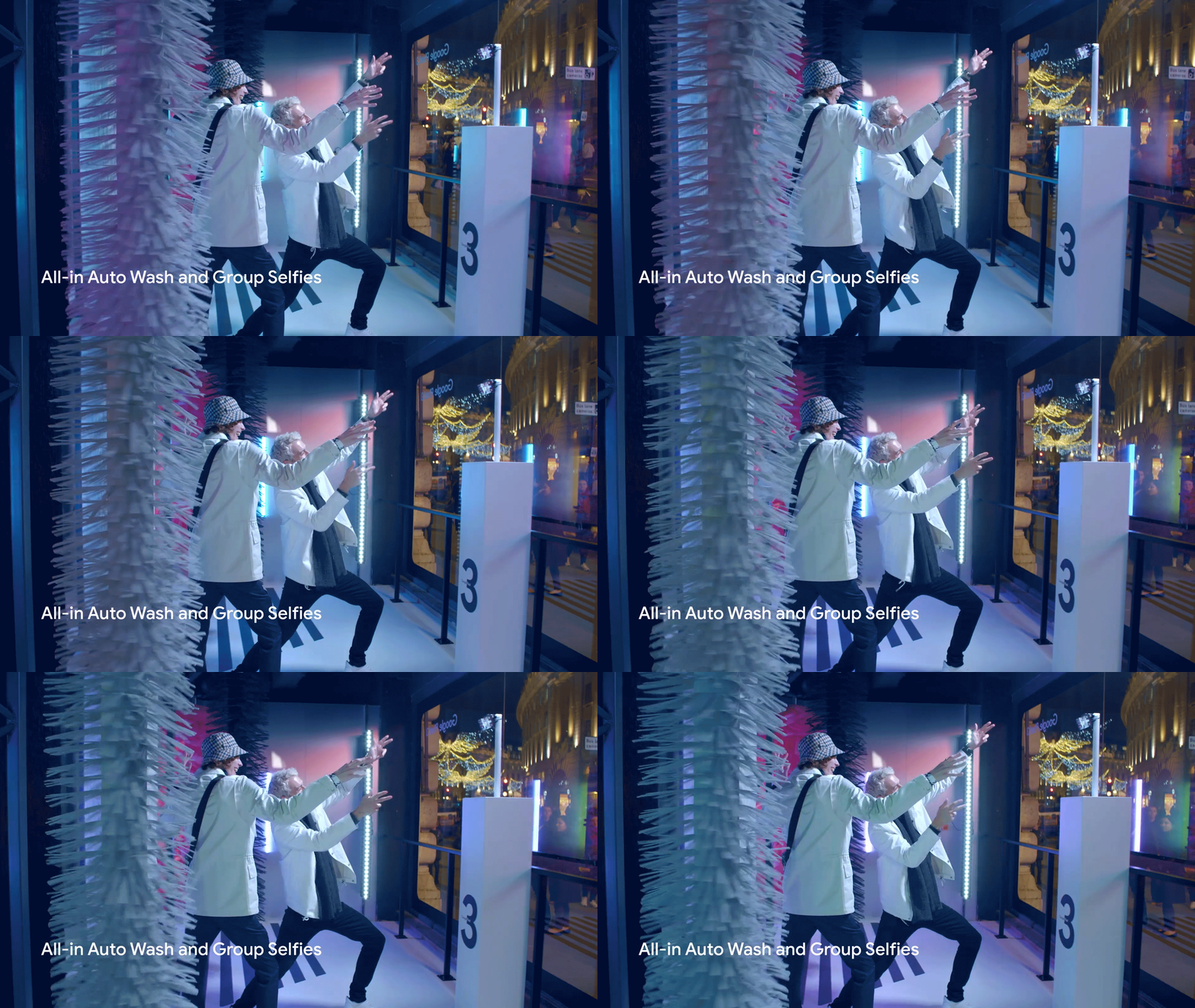
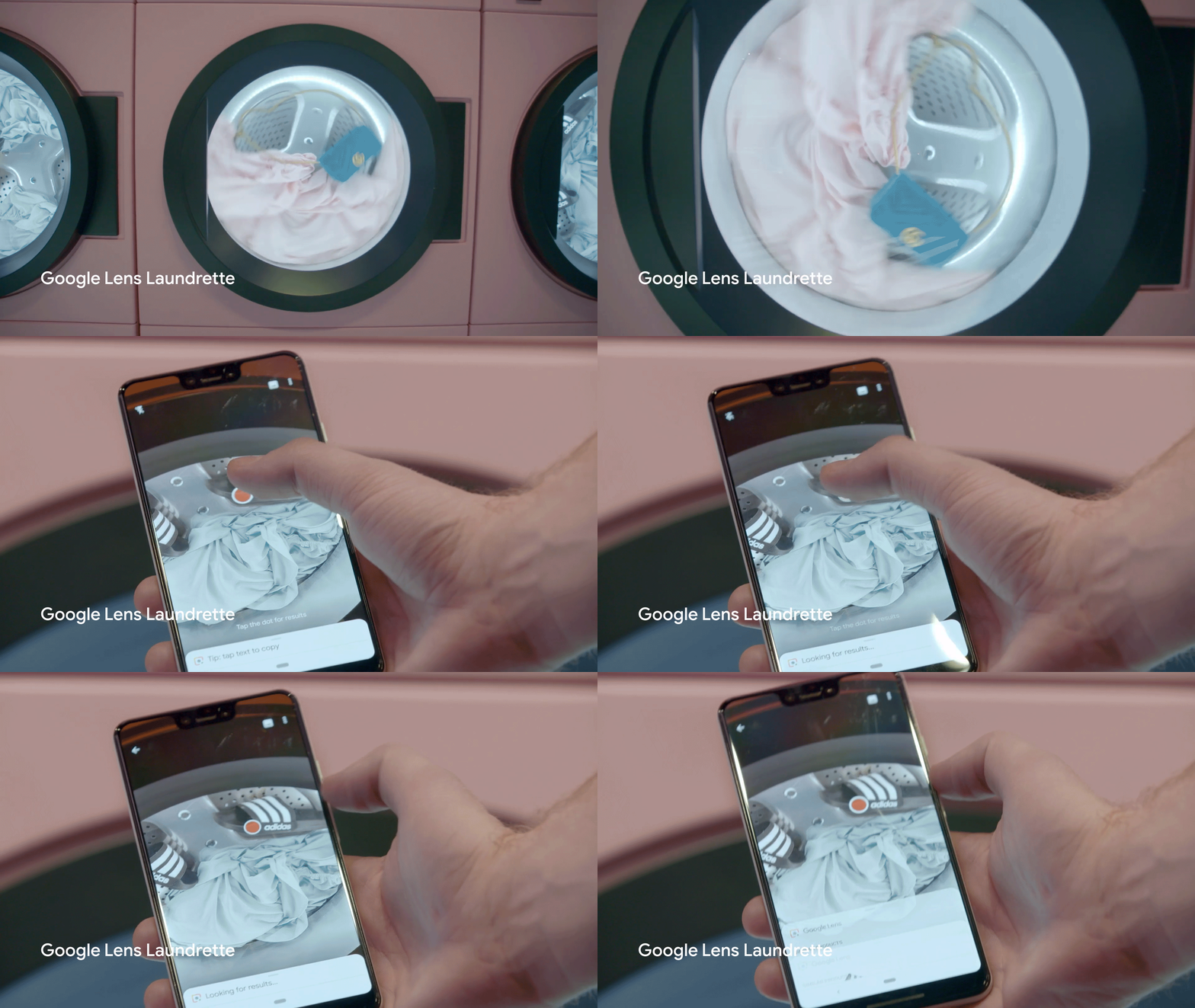
Google Pixel 3 The Curiosity Room is a massive experience platform built for the Google phone – Pixel 3 release. The Pop-Up had opened in London only for a month, with a total of 71,000 visitors each spending an average of 20 minutes inside the store. It has increased the percentage of total sales by 34%. In addition to the product showcase, there were seven scenes set up for selfies and phone feature experiences. Platforms and workshops were set up to host 20-30 events. They included catering events, live streams, forums, fashion shows, etc.
The massive success of the Pop-Up is a testament to the new “try it on before you buy” consumer habit, where transactions should cost “zero” time, and customers are only willing to spend time on the experience. Regarding the ever-changing consumer habits, shopping centers should reimagine their content and space. Most of the shopping centers are relying on a fixed lease plan to drive their tenants and content. To enrich the possibilities of the in-person experience, all retail development must adopt smart planning to allow plug and play technology-enabled spaces with flexible lease terms. In turn, a descriptive and well-planned tenant criteria manual should guide the storefront design, infrastructures, and tenant organization.
The massive success of Pop-Ups is a testament to the new realities of consumer behavior. “Try it on before you buy” has become a new habit for consumers these days. They are willing to spend more time on physical experiences, while transactions should cost “zero” time. In response to the ever-shifting consumer expectations and purchasing habits, retail complexes should creatively incorporate flexible and community spaces with brick-and-mortar stores. Brands can explore the flexibility and marketing capacities of these creative spaces. Shopping centers must adapt to a new reality by redefining the concept of retail. Smart planning, vigorous tenant criteria, flexible lease terms, and a well-planned infrastructure are the keys to stay relevant and thrive businesses forward. They open up infinite possibilities for in-person experience at retail developments.
Playful Engagement
Playful engagement is a powerful means for brands in connecting with customers through fun and interactive experiences. Delivering an immersive narrative that harnesses consumers’ imaginations and maximizes their emotional responses will continue to be a defining factor of a successful engagement strategy. Brands can evoke passions, thoughts and purchasing behaviors by providing a memorable playful experience, an enhanced customers’ journey. Brand experience makes a company and its products resonate with its target audience viscerally through meaningful interactions and a multidisciplinary platform, both online and offline. In a lot of cases, brands tended to adopt playful in-person participations to redefine their cultural values, and transcend traditional marketing disciplines.
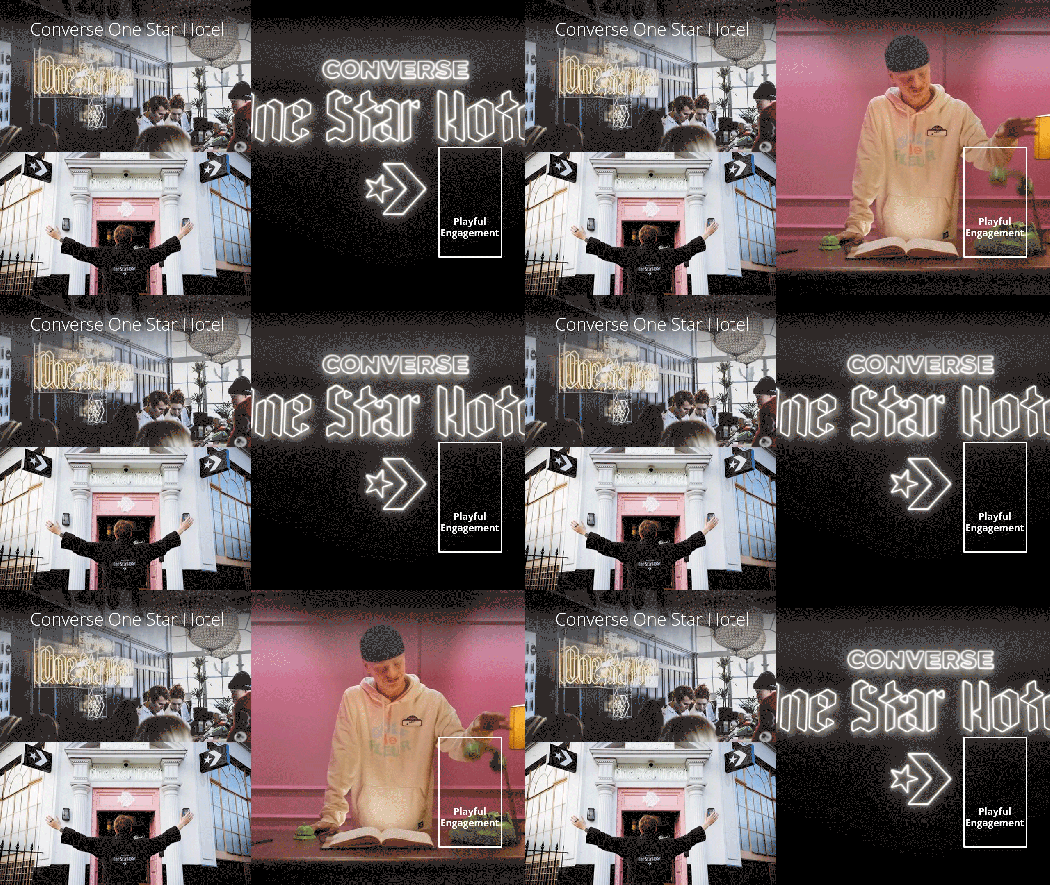
Converse One Star Hotel was a two-day immersive brand activation Pop-Up in East London, where Converse hoped to reimagine the status of the One Star shoe in streetwear culture. The One Star Hotel in the heart of the whole campaign. Besides reshaping the brand culture of Converse, it connected and expanded the influence of its One Star shoe. The marketing of the Pop-Up reached out to the local media in East London and Brooklyn to attract streetwear fans to visit the One Star Hotel. The event also featured a review by Time Out, which was a spoof review playing on the concept of “one-star” rating.
The One Star Hotel was a five-story exclusive sneaker showcase venue with six different selfies “room” scenes, each with a different design intent by celebrities like A $ AP Nast, Yung Lean, and MadeMe. The event consisted of performances, workshops, and conversations with some of the world’s most exciting creators, as well as a variety of activities from live screen printing to a mahjong experience contest. The Pop-Up proved that when the spirit of “One Star” surges, so does the sales of “One Star.” The community of streetwear enthusiasts flocked to the One-Star Hotel. In terms of social media, the search volume of “Converse One Star” has increased by 300%. All exclusive edition sneakers were sold out, and the One Star shoe on the Converse website was sold for up to five times the standard price.
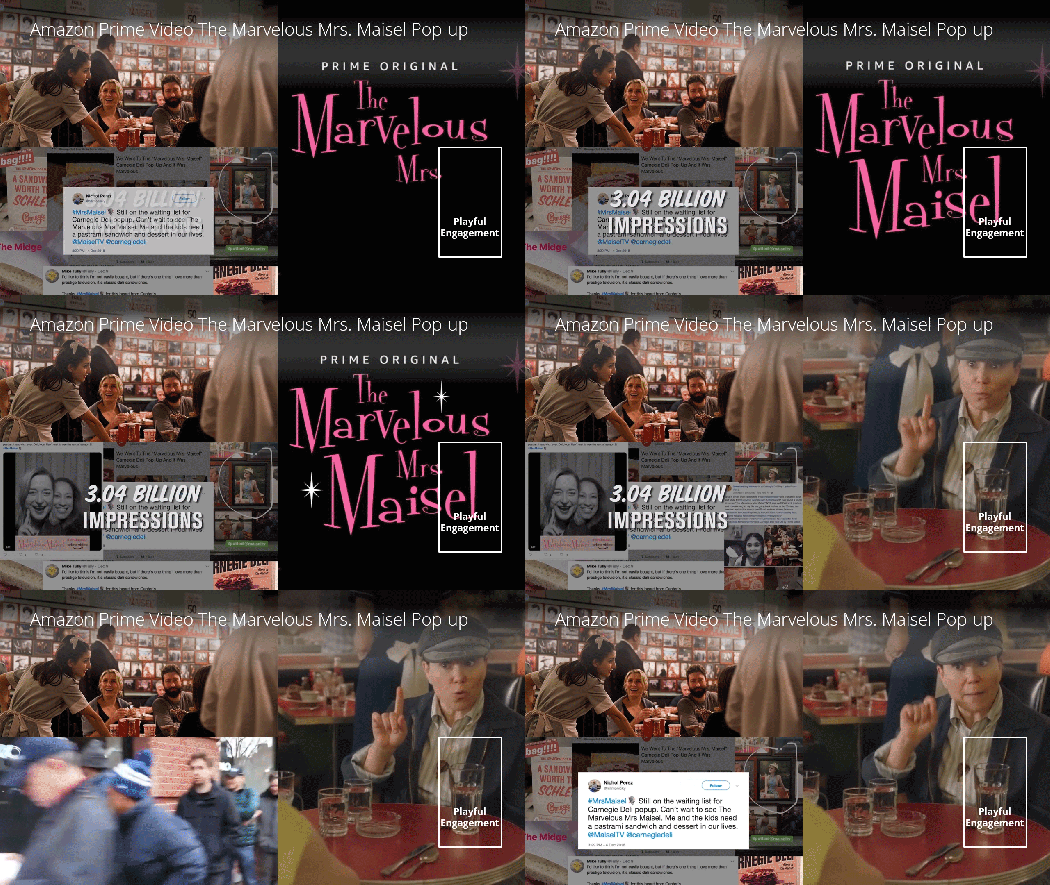
The Marvelous Mrs. Maisel is a period comedy-drama series produced by Amazon Prime Video. In November and December 2018, fans of The Marvelous Mrs. Maisel returned to 1958 New York via a Pop-Up at the iconic Carnegie Deli in Lower Manhattan. To help build momentum for the Prime original show’s second season release, Amazon revamped the iconic, defunct restaurant and gave it a new life in the form of a Pop-Up. It brought visitors to the era of the show, where everything from the décor to pricing on the menu reflected the life of 1950s New York. The Pop-Up was a fully immersive and highly popular photographable check-in destination.
The dining Pop-Up with fantastic American retro experiences was a huge success, not only for fans of the show but for everyone who missed and loved that era. The restaurant’s waiting list reached 8,000 people at one point, catering to over 11,000 people—ample conversations created around the topical signature “Maisel” sandwich and the 1950s-style delivery service. The Pop-up garnered 280 pieces of press coverage, including Buzzfeed, Forbes, Vogue, Eater, USA Today, and ten broadcast segments, with a social media reach of 45 million.
Takeaways
Many countries in the world are undergoing lockdowns to break the pandemic chain. Non-essential stores are closed for business by order of a public authority. Brick-and-mortar businesses are facing the most significant challenge in history. Once shopping centers are reopening their businesses in a post-pandemic era, vacancy rates are expected to edge up much further. On the contrary, the rapid rise of digital engagement services, retail activities on social channels, on-screen augmented reality experiences, web-based artificial intelligence, and contactless transaction systems, for instance, has taken the world by storm. The fuel marketing campaigns and accelerates sales growth of brands amid the coronavirus outbreak.
In the post-pandemic economy, e-commerce will once again redefine our contemporary consumer habits. At the same time, the avoidance of public gatherings and physical in-person shopping is hurting traffic to brick-and-mortar retailers. Consumers expect businesses to provide an omnichannel experience by seamlessly connecting their online and offline platforms. Brands should interact with their customers both digitally and physically on a unified and interconnected system. Creating fun experiences to explore, inspire, and entertain has become the immediate objective of brick-and-mortar businesses. Brands must strive to provide clients with hospitality-driven experiences beyond the transaction. Shopping centers today are urged to seize this opportunity to rethink their leasable spaces and operational methods. They ought to make greater use of flexible spaces that can accommodate Pop-ups and experience kiosks. The major key drivers of the retail evolution are meaningful in-person experiences and powerful brand culture.
 ROSE HUNG